
Our Historic Farmland
The History of Westfall Farm
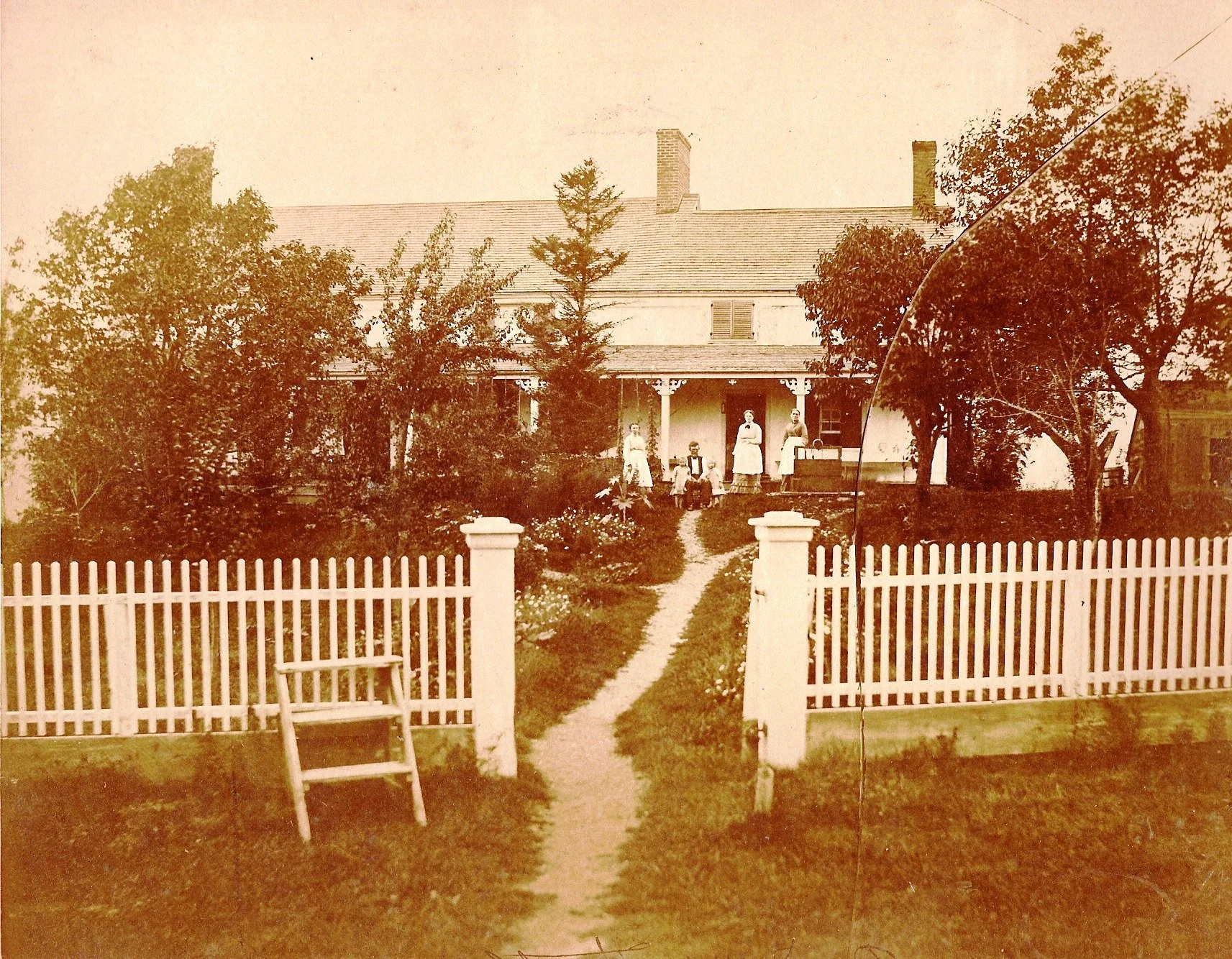
1885 Westfall Homstead
Key Historical Periods
Foundation (1774–1940): Simon Westfall purchased the land from the Earl of Perth in 1774, just before the American Revolution. It remained in the Westfall family for nearly 170 years.
Underground Railroad: In the early 19th century, the farm reportedly served as a stop on the Underground Railroad for slaves seeking freedom.
Mortimer Era (1940–2017): Purchased in 1940 by Charles G. Mortimer, Sr., who modernized it into a dairy farm before transitioning it into a Morgan horse farm.
Westfall Winery (2000–2017): Loren and Georgene Mortimer planted vineyards in 2000 and opened the winery in 2001, producing 9,000 cases of wine annually.
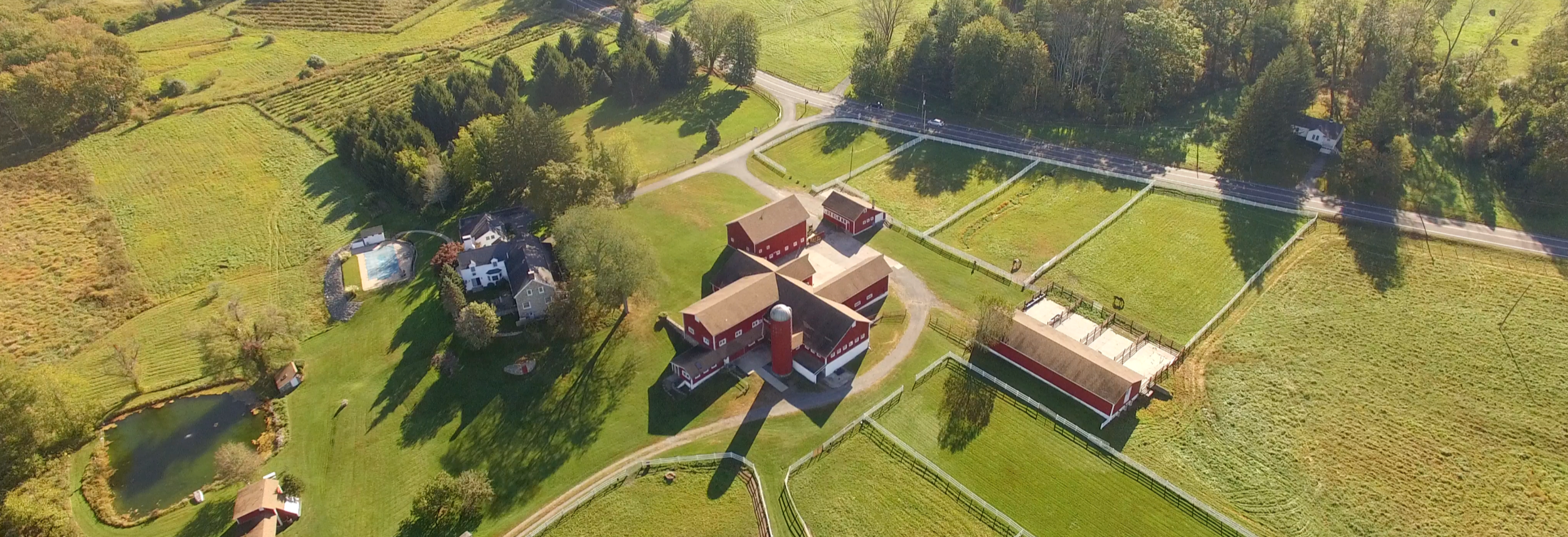
Animal Sanctuary (2017–Present): In December 2017, the 336-acre property was sold to Tamerlaine Animal Sanctuary, transitioning from a commercial winery to a rescue for farm animals.
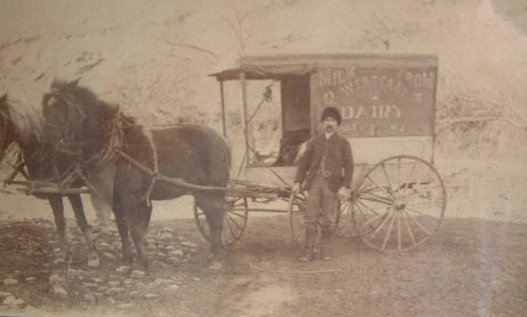
Early Dairy Production
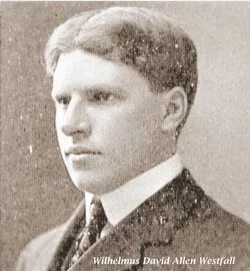
Wilhelmus Westfall
A Farm Connected to Freedom
In the early nineteenth century, Westfall Farm became associated with a profound chapter in American history. The property is believed to have served as a stop on the Underground Railroad, offering refuge to enslaved people traveling north in search of freedom. Situated near the Delaware River and close to transportation routes through the valley, the farm provided a discreet and strategic location for those escaping bondage.
This role reflected the independent spirit of the early settlers of the region and established Westfall Farm as a place not only of agriculture but also of human dignity and moral courage.
Generations of the Westfall Family
For generations, the farm remained in the hands of the Westfall family.
Over time, Wilhelmus Westfall, a descendant of Simon, expanded the original farmhouse and continued to develop the agricultural operation. The farm maintained strong economic ties with the nearby town of Port Jervis, which was growing into a regional commercial center.
The farm later passed to David Westfall, who lived on the property for an extraordinary ninety-five years. During his lifetime, he raised a family and witnessed the transformation of the surrounding region. As Port Jervis expanded into a major railroad hub in the nineteenth century, Westfall Farm adapted by diversifying its agricultural enterprises and maintaining active trade with the booming town.
David’s son, Dr. Wilhelmus David Westfall, eventually inherited the property. A distinguished professor of mathematics at the University of Missouri, he maintained the family’s connection to the farm until 1940, when the property was sold to Charles G. Mortimer Sr.
The Mortimer Era
Under the Mortimer family, Westfall Farm continued to evolve while preserving its historic character.
During the 1940s and 1950s, the property operated as a dairy farm. In the mid-1960s, the farm transitioned into an equestrian facility, with grazing pastures converted to hayfields and fishing ponds.
In 1985, Charles “Duke” Mortimer Jr. and his wife Elisabeth “Bette” Smith Mortimer moved to the farm. They embraced the beauty of the land and created a vibrant cultural environment there. Duke Mortimer, a veteran of the television and film industry, founded the Mortimer Dramatic Arts Workshop, transforming part of a barn into a small theater where students from across the Delaware Valley gathered to study acting.
In the early 2000s, the farm entered another chapter when Duke and Bette’s son Loren Mortimer and his wife Georgene established Westfall Winery, renovating an old dairy building into a wine production facility.
A New Chapter: Tamerlaine Sanctuary & Preserve
Today, the property continues its long tradition of stewardship under Tamerlaine Sanctuary & Preserve, which carries forward the legacy of Westfall Farm in a new way.
While the farm has evolved across three centuries—from colonial homestead, to agricultural enterprise, to cultural center—it remains rooted in the same values that shaped its earliest days: a deep connection to the land, community, and compassion.
At Tamerlaine, the historic farm now serves as a place where animal protection, wildlife conservation, humane education, and the arts come together. In this way, the land that Simon Westfall first cultivated in 1774 continues to serve both people and the natural world, preserving a remarkable legacy of history, resilience, and care.
Westfall Farm is one of the most historically significant properties in the Delaware River Valley, with roots stretching back to the earliest Dutch settlement of the Minisink region, where the borders of present-day New Jersey, New York, and Pennsylvania meet.
The story begins in the mid-17th century with Juriaen Westfall, one of the earliest members of the Westfall family to arrive in North America in 1642 as part of the Dutch colony of New Netherland. Over the following decades, his descendants gradually moved south along the Hudson River and the Old Mine Road into the fertile valleys surrounding the Delaware River.
By the early 1700s, members of the Westfall family had settled in the region historically known as Minisink, named for the Munsee (Minisink) Indians who had long inhabited the area. Early Dutch settlers farmed the rich river valleys and established small communities along the Delaware River. A 1725 survey of the region documented several Westfall family members among the early landholders in the Minisink area.
Among the descendants of Juriaen Westfall was Simon Westfall, who would become the founder of what came to be known as Westfall Farm in Montague, New Jersey.
The Founding of Westfall Farm
In 1774, Simon Westfall purchased a tract of land in Montague from the Earl of Perth, one of the proprietors of colonial New Jersey. On this land he established the farm that would carry the Westfall name for generations. Simon built the original stone farmhouse and began cultivating the surrounding land, continuing the agricultural traditions that had defined the Westfall family since their arrival in America more than a century earlier.
The timing of Simon’s purchase placed Westfall Farm at a pivotal moment in American historyThe timing of Simon’s purchase placed Westfall Farm at a pivotal moment in American historyOnly one year later, in April 1775, the American Revolution began. The Delaware River valley quickly became a contested frontier region. The area surrounding Westfall Farm experienced raids and skirmishes, including those led by Joseph Brant and Loyalist forces operating in nearby Port Jervis, New York. Despite the instability of the period, Westfall Farm survived the Revolutionary era and continued to operate as a working agricultural homestead.
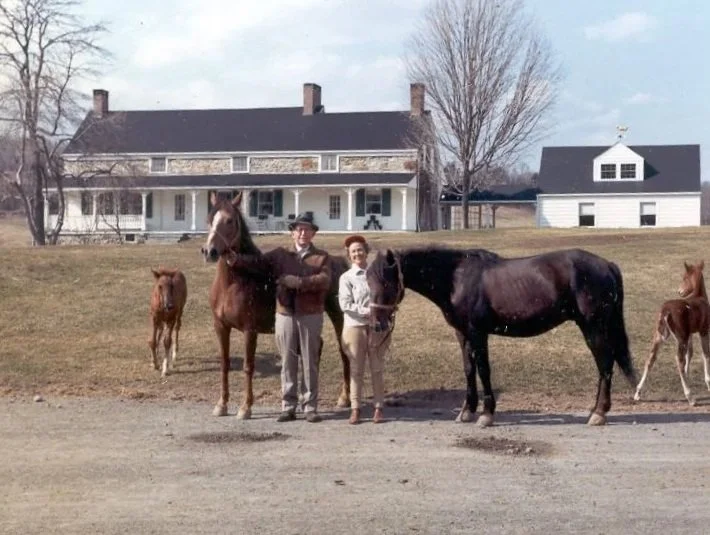
Charles & Jerry Mortimer
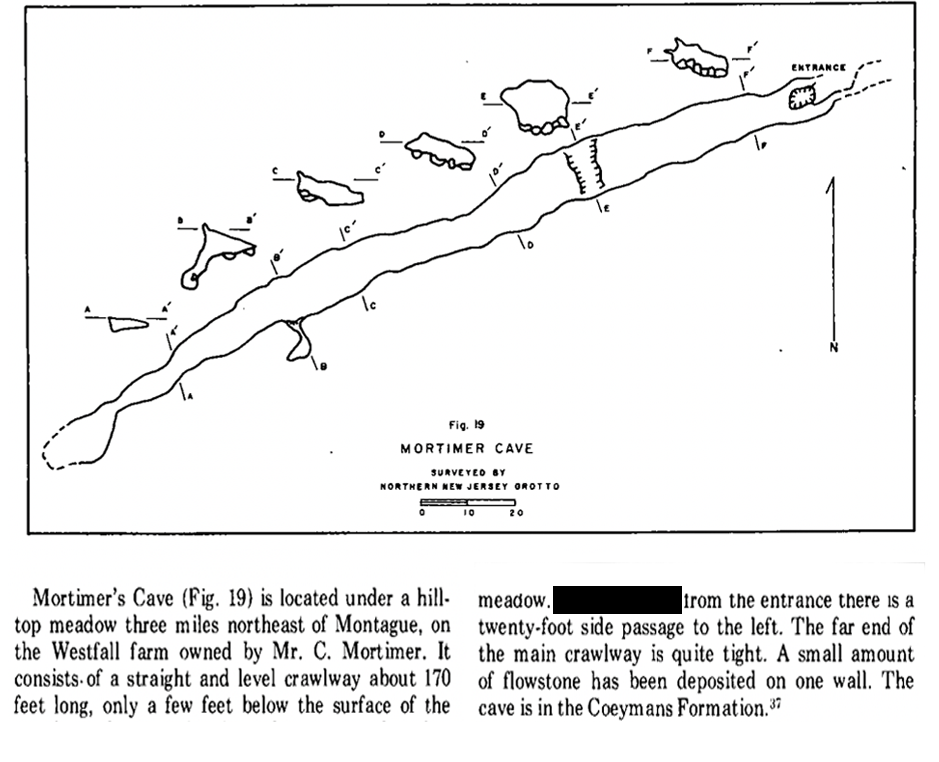
Caves on the property believed to have provided refuge as part of an Underground Railroad stop.
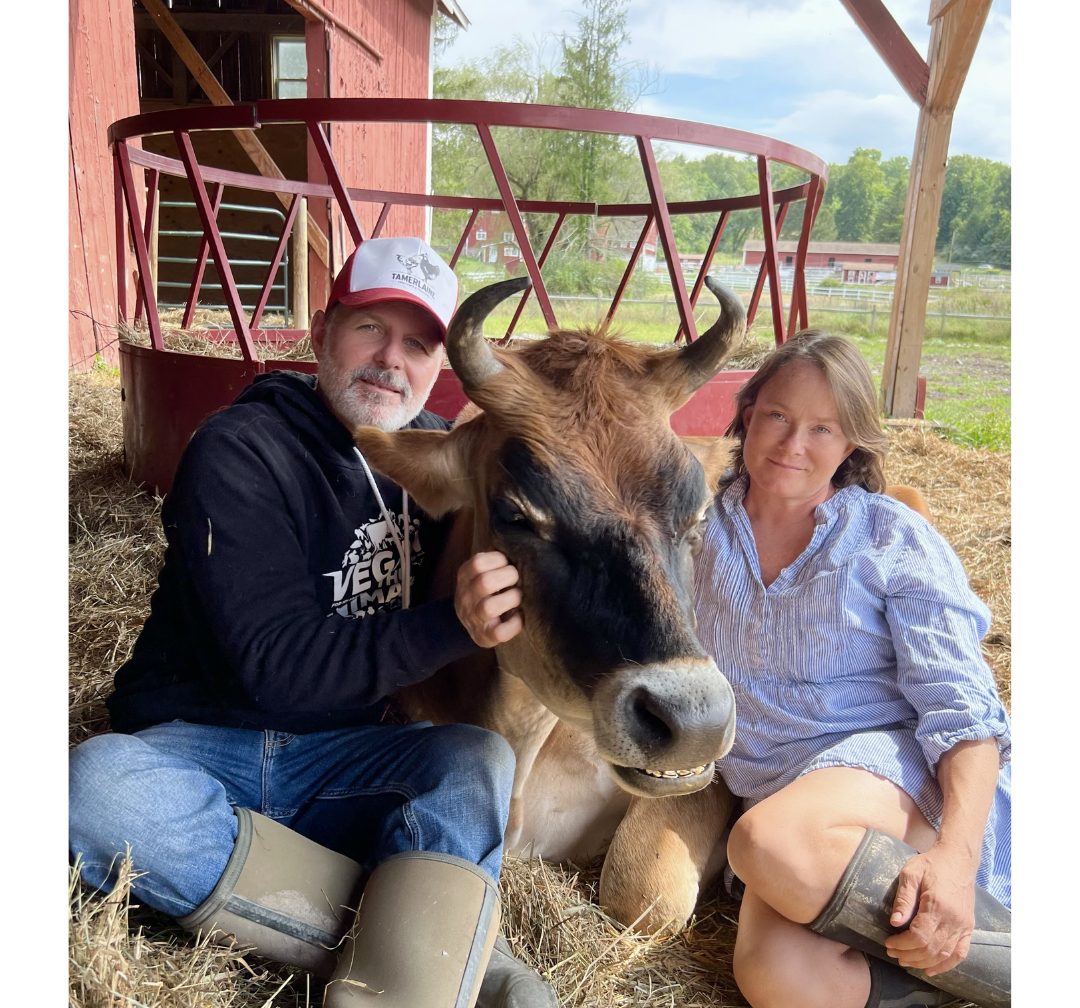
Gabrielle Stubbert & Peter Nussbaum Co-Founders Tamerlaine Sanctuary & Preserve